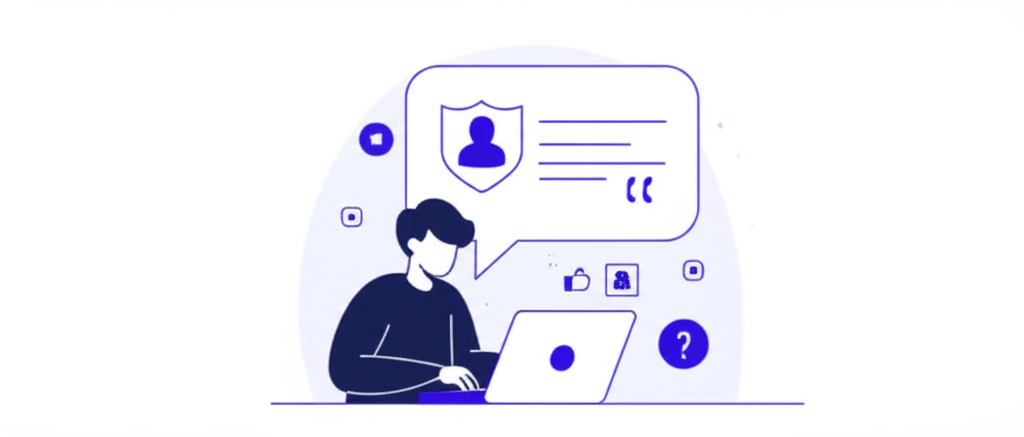
Most websites think they need to “rank” in ChatGPT. That’s the wrong mental model entirely. ChatGPT doesn’t rank pages — it cites sources. And the signals that drive citations are fundamentally different from the signals that drive Google rankings.
When ChatGPT answers a question, it retrieves information from the web (via Bing’s index), synthesizes an answer, and attributes specific claims to specific sources. The question isn’t “How do I get to position #1 in ChatGPT?” — it’s “How do I become a source that ChatGPT trusts enough to cite?”
This guide breaks down exactly what the research says about ChatGPT’s citation behavior, the 7 signals that drive citations, and a practical plan to optimize your content for ChatGPT visibility.
TL;DR — How to Get Cited by ChatGPT
- ChatGPT selects sources from training data quality, not real-time rankings — structure matters most
- 7 citation signals: schema markup, E-E-A-T, direct answers, FAQ content, citations, brand authority, and entity presence
- Structure content as clear question-and-answer pairs with quotable statistics
- Build external references: Wikipedia, Wikidata, Crunchbase, press coverage, and quality backlinks
- Monitor ChatGPT mentions with manual testing and AI citation tracking tools
How ChatGPT Selects Sources to Cite
ChatGPT uses a Retrieval-Augmented Generation (RAG) architecture when answering questions that require current information. Here’s how the citation pipeline works:
- Query interpretation: ChatGPT analyzes the user’s question to understand the information need, including intent, specificity, and domain.
- Web retrieval: The system queries Bing’s search index to retrieve relevant web pages. This is where traditional SEO still matters — your page needs to be discoverable in Bing’s index.
- Content evaluation: ChatGPT reads the retrieved pages and evaluates their relevance, credibility, specificity, and utility for answering the question.
- Synthesis: The model generates a unified answer by combining information from multiple sources.
- Attribution: Specific claims, statistics, and factual statements are attributed to their sources via inline citations.
The critical decision point is step 3: content evaluation. ChatGPT doesn’t cite every page it retrieves — it selects the sources that best support its synthesized answer. Understanding what makes a source “selectable” is the key to getting cited.
Training Data vs. Live Search
ChatGPT’s knowledge comes from two sources: its training data (a snapshot of the web from its training period) and live web search (real-time retrieval via Bing). For questions about established topics, training data dominates. For current events, product information, or recent data, live search is primary.
This has a practical implication: your content can influence ChatGPT’s responses even without being actively crawled, if it was included in training data. But for ongoing citation in live search responses, your content needs to be current, accessible, and optimized.
What the Data Says: Citation Analysis Research
The most comprehensive study on generative engine citation behavior comes from Aggarwal et al.’s “GEO: Generative Engine Optimization” paper, published at KDD 2024. The researchers analyzed thousands of queries across multiple generative engines and tested specific optimization techniques.
Key findings:
- Quotation addition improved citation visibility by 15.2% — the single most effective technique
- Statistics and data inclusion improved citation rates by 7.2%
- Fluency optimization improved rates by 6.0%
- Authoritative language improved rates by approximately 5-6%
- The combined effect of multiple techniques reached up to 40% improvement
- Notably, smaller sites benefited more from optimization than established domains — GEO can level the playing field
Additional research from BrightEdge (2025) found that structured data implementation correlates with a 44% increase in AI citations, and SEMrush (2025) reported that FAQ schema increases AI Overviews inclusion by 31%.
The 7 Signals That Drive ChatGPT Citations
1. Quotations and Attributed Statements (+15.2% Citation Rate Increase)
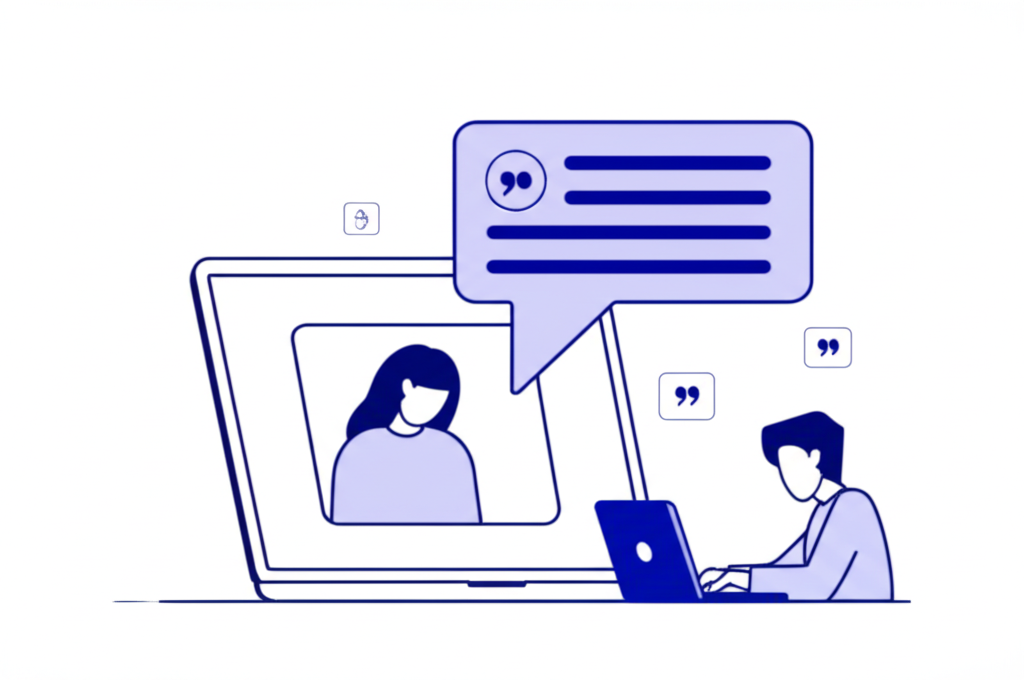
This was the strongest signal in the KDD 2024 study. Content that includes direct quotes from identifiable sources — researchers, executives, industry experts — is dramatically more citable.
Why? ChatGPT’s attribution system needs clear source-claim relationships. A direct quote with attribution gives the model a clean, specific claim it can cite with confidence.
How to implement:
- Include 2-3 attributed quotes per major content piece
- Quote industry experts, researchers, or analysts by name
- Use blockquote formatting for visual and structural clarity
- Ensure quotes are substantive (specific claims, not generic endorsements)
2. Statistics with Explicit Sources (+7.2%)
Specific numbers from named sources are citation magnets. “Revenue increased” is not citable. “Revenue increased 34% year-over-year (Gartner, 2025)” is.
How to implement:
- Include at least 3-5 cited statistics per content piece
- Always name the source and year: “(Source Name, Year)”
- Use specific numbers, not ranges or approximations when possible
- Link to the original source when available
3. Authoritative Language and Credentials (+6%)
Content written with confident, expert-level language gets cited more than content that hedges or uses casual tone. This doesn’t mean being aggressive or absolute — it means being precise and definitive where your expertise supports it.
How to implement:
- Replace “might be” and “could potentially” with “is” and “does” when the evidence supports it
- Show your credentials: author bios with verifiable expertise, company credentials, relevant experience
- Use domain-specific terminology correctly
- Present original analysis, not just summaries of others’ work
4. FAQ Format and Direct Question Answering
ChatGPT frequently encounters user queries phrased as questions. Content that directly maps questions to answers — especially using FAQ format — provides ready-made citation targets.
How to implement:
- Add FAQ sections to key content pages (5-8 questions per section)
- Use the actual questions your audience asks (check “People Also Ask” boxes, Answer the Public, or your site search data)
- Start each answer with a direct, 1-2 sentence response before elaborating
- Implement FAQPage schema markup for machine readability
5. Structured Data and Schema Markup
Schema markup gives ChatGPT’s retrieval system structured context about your content: who wrote it, what it’s about, when it was published, and what entity created it. Sites with comprehensive structured data see 44% more AI citations (BrightEdge, 2025).
Priority schema types:
- Article/BlogPosting (for every content page)
- Organization (homepage)
- Person (author pages)
- FAQPage (any page with FAQ content)
- Product/Service (for offering pages)
6. Content Freshness and Update Timestamps
ChatGPT’s live search system prioritizes recent content for queries where timeliness matters. Visible publication and “last updated” dates signal that your content is current and maintained.
How to implement:
- Display publication dates and “last updated” dates on all content
- Include datePublished and dateModified in your Article schema
- Review and update key content at least quarterly
- When updating, change the content meaningfully — don’t just change the date
7. Brand Entity Clarity
ChatGPT needs to understand who it’s citing. If your brand entity is ambiguous (common name, no Wikipedia entry, inconsistent information across the web), ChatGPT may avoid citing you even when your content is relevant.
How to implement:
- Ensure your Organization schema is complete and accurate
- Maintain consistent brand information across all web properties
- Create or update your Wikipedia/Wikidata entry if your organization qualifies
- Build mentions on authoritative industry sites
Case Study: Before and After Optimization
Consider a B2B SaaS company publishing content about project management best practices. Before GEO optimization, their content read like a typical SEO blog post: keyword-optimized headers, general advice, no cited data, and no structured markup beyond basic meta tags.
Before optimization:
- Generic content: “Project management tools can help teams be more productive”
- No cited statistics or sources
- No FAQ sections
- Basic meta tags only (no schema markup)
- Author byline with no credentials or Person schema
- ChatGPT citation frequency: 0 across tracked queries
After optimization (applying all 7 signals):
- Specific claims with sources: “Teams using structured project management methodologies complete projects 28% faster and 23% under budget (PMI Pulse of the Profession, 2025)”
- Expert quotes from named project managers and researchers
- FAQ section with 6 common project management questions
- Full schema markup: Article, Person, Organization, FAQ
- Author bio with PMI certification, 12 years experience, LinkedIn link
- ChatGPT citation frequency: cited in 3 of 10 tracked queries within 6 weeks
The content length barely changed. The difference was entirely in how the information was presented and structured.
ChatGPT vs Perplexity: Different Citation Behaviors
While the underlying optimization principles are similar, ChatGPT and Perplexity have measurably different citation behaviors that affect your strategy.
| Behavior | ChatGPT | Perplexity |
|---|---|---|
| Average citations per response | 7.92 | 21.87 |
| Citation placement | Inline footnotes | Inline footnotes + numbered list |
| Source diversity | Tends to cite fewer, more authoritative sources | Cites more broadly, including niche sources |
| Retrieval engine | Bing | Proprietary (multiple sources) |
| Freshness weighting | Moderate | Higher (more emphasis on recent content) |
What this means for strategy: Perplexity cites nearly 3x as many sources per query, which means there’s more opportunity to be included. However, Perplexity’s citations are spread across more sources, so each individual citation drives less traffic. ChatGPT cites fewer sources, but each citation carries more weight because it’s one of a small, selected group.
The good news: optimizing for one platform’s citation signals improves performance across both. The 7 signals above are platform-agnostic.
What NOT to Do: Common Mistakes
Mistake 1: Keyword Stuffing for AI
Some marketers try to “hack” AI citations by stuffing content with phrases like “according to experts” or “studies show” without actual sources. AI models are trained to distinguish genuine attribution from fake authority signals. This approach backfires.
Mistake 2: Creating Content Only for AI Consumption
Content that reads like it was written for a machine — unnatural, over-structured, devoid of original analysis — performs poorly with both human readers and AI models. Write for experts first; optimize structure for AI second.
Mistake 3: Ignoring Bing SEO
ChatGPT’s web search runs through Bing. If your content isn’t indexed and performing well in Bing, ChatGPT’s retrieval system won’t find it. Submit your sitemap to Bing Webmaster Tools and ensure your content is indexed.
Mistake 4: Blocking AI Crawlers
Check your robots.txt for rules blocking GPTBot, ClaudeBot, or PerplexityBot. Some CMS platforms and security plugins add these blocks by default.
Mistake 5: Thin Author Profiles
Publishing content under “Admin” or anonymous bylines undermines the credibility signals AI models look for. Every piece of content should have a named author with a substantive bio.
Building a ChatGPT Citation Strategy in 30 Days
Week 1: Assessment
- Run a GEO audit on your top 5 content pages
- Check your Bing Webmaster Tools status — are your pages indexed?
- Manually test: ask ChatGPT questions in your domain and see if you’re cited
- Identify your top 5 competitors who ARE being cited
- Analyze what those cited competitors’ content looks like (structure, data density, schema)
Week 2: Technical Optimization
- Implement Article, Organization, Person, and FAQ schema on priority pages
- Verify robots.txt allows AI crawlers
- Submit (or re-submit) your sitemap to Bing Webmaster Tools
- Add visible publication and “last updated” dates to all content
Week 3: Content Optimization
- Add 3-5 cited statistics to each of your top 10 content pages
- Include at least 1-2 expert quotes per piece
- Add FAQ sections (5-8 questions each) to your top landing pages
- Restructure introductions to answer-first format
Week 4: Measurement and Iteration
- Re-run your GEO audit and compare scores
- Test ChatGPT again with the same queries from Week 1
- Check Google Analytics for AI referral traffic (segment by source)
- Document what changed and plan next month’s optimizations
How to Track Your Citation Status
Measuring AI citation performance is still an emerging practice, but there are concrete steps you can take today.
Manual testing: Maintain a list of 10-20 queries relevant to your business. Ask them in ChatGPT weekly and track whether you’re cited, how prominently, and for which claims.
Referral traffic analysis: In Google Analytics 4, segment traffic by source to identify visitors coming from chat.openai.com, chatgpt.com, and perplexity.ai.
Automated tracking: BlueJar’s Citation Visibility (CV) Tracking monitors how your brand appears across AI search engines, alerting you to citation changes and tracking your visibility over time.
The most important metric isn’t citation count alone — it’s citation accuracy. Is the AI model describing your product/service correctly? Incorrect citations can be worse than no citation at all. Regular monitoring catches inaccuracies early.
FAQ
Does ChatGPT remember which sites it cited before?
No. Each ChatGPT conversation is independent. The model doesn’t build a preference for sites it has cited previously. Every query triggers a fresh retrieval and evaluation. This means you need to consistently maintain your optimization — past citations don’t guarantee future ones.
Can I pay to get cited by ChatGPT?
No. As of 2026, there is no advertising or paid placement system within ChatGPT’s generated responses. Citations are entirely based on the model’s evaluation of retrieved content. Your only path to citation is producing high-quality, well-structured, authoritative content.
How long does it take to start getting cited?
Technical optimizations (schema markup, robots.txt fixes) can impact citation within 2-4 weeks as AI crawlers re-index your content. Content optimization (adding data, restructuring for answer-first format) typically shows results in 4-8 weeks. Authority building is a longer game: 2-3 months for meaningful impact.
Does social media activity affect ChatGPT citations?
Indirectly. Social media profiles contribute to your brand’s entity clarity, and widely-shared content may be more likely to appear in Bing’s index. But there’s no direct signal from social engagement to ChatGPT citation probability. Focus your efforts on content and structured data first.
Is it worth optimizing for ChatGPT if my audience uses Google?
Yes, for two reasons. First, Google AI Overviews use similar citation signals, so ChatGPT optimization improves your Google AI visibility too. Second, ChatGPT’s search volume is growing rapidly — it already handles roughly 12% of Google’s daily volume. Ignoring it means ignoring a significant and growing channel.
Frequently asked questions
Why doesn’t my website appear in ChatGPT answers?
The most common reasons websites don’t appear in ChatGPT answers: missing structured data (schema markup), vague or unverifiable content claims, low brand authority signals (few third-party mentions), content that doesn’t match the specific questions users ask AI, and no LLMs.txt file to help AI understand your site structure.
What types of content does ChatGPT prefer to cite?
ChatGPT preferentially cites content with: specific statistics and named data sources, clear factual statements attributed to named experts or organizations, content from sites with strong brand authority signals across multiple platforms, FAQ-style content that directly answers specific questions, and pages with FAQPage or Article schema markup.
Does having ChatGPT Plus or API access help me appear in answers?
No. Whether you appear in ChatGPT answers depends entirely on your website’s GEO optimization — structured data, content quality, and brand authority. Having a ChatGPT subscription has no effect on whether ChatGPT cites your website in its answers.
How does Bing indexing affect ChatGPT citations?
ChatGPT uses Bing’s web index for its real-time browsing feature. Ensuring your site is indexed by Bing (submit via Bing Webmaster Tools), has clean technical SEO (fast load times, no crawl errors), and uses schema markup directly improves your ChatGPT citation potential for browsing-mode queries.
Can I directly submit my website to ChatGPT?
There’s no direct submission process to ChatGPT. You improve your citation likelihood through: GEO optimization (schema, content quality, authority signals), ensuring Bing indexes your site, and building brand mentions across authoritative third-party sources. The more verifiable and citable your content, the more likely ChatGPT includes it in answers.