Key takeaways
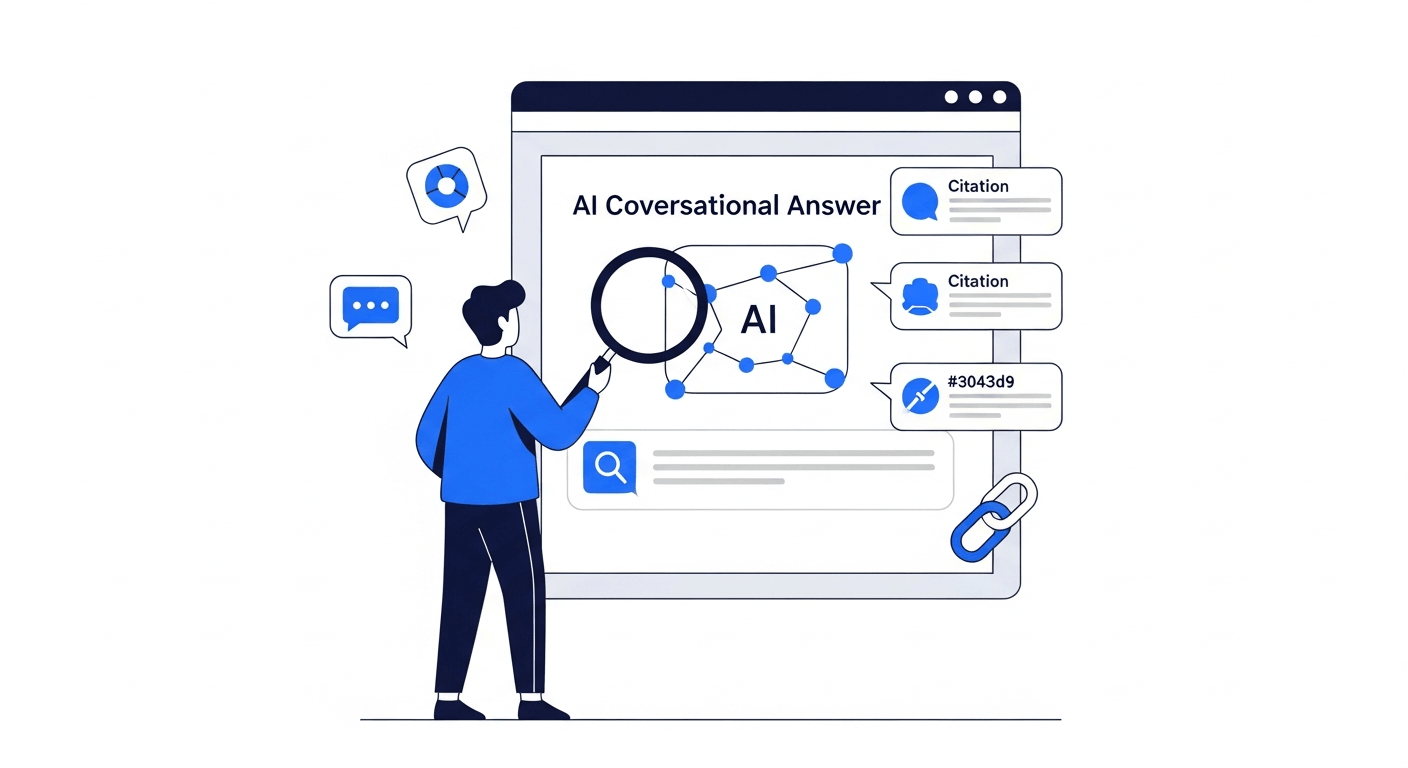
- Google AI Mode is a separate search experience from AI Overviews — it replaces the traditional results page entirely and uses Gemini 2.5 to generate conversational answers with citations.
- Only 4.5% of AI Mode sessions produce a click to an external website for informational queries, but 69% of transactional searches in AI Mode drive traffic.
- Google cites itself in 17.42% of AI Mode answers — more than YouTube, Facebook, Reddit, Amazon, Indeed, and Zillow combined.
- Google says there are no special optimization requirements for AI Mode. The brands that win are doing strong SEO, building real authority, and making their content easy for AI to extract.
Google AI Mode is not AI Overviews. That distinction matters more than most marketers realize. AI Overviews sit above the traditional ten blue links. AI Mode replaces them entirely. According to Semrush’s early research, only 53.68% of domains cited in AI Mode overlap with the top 10 organic results. Almost half the citations come from somewhere else.
If you have already been optimizing for Google AI Overviews, you are ahead of most. But AI Mode is a different animal. It runs up to 16 simultaneous searches behind the scenes, pulls from more diverse sources, and delivers answers that make the traditional search page optional. This guide breaks down what AI Mode actually does, how it differs from AI Overviews, and what you can do to get your brand cited in it.
What is Google AI Mode
Google AI Mode is a conversational search experience powered by Gemini 2.5. Google introduced it on March 5, 2025 as a Search Labs experiment, rolled it out to all US users on May 20, 2025, and has since expanded it to 180 countries and territories.
You can access it through a dedicated “AI Mode” tab in Google Search, right next to Images and Videos. You can also go directly to google.com/aimode. When you enter AI Mode, the standard search results disappear. Instead, you get a chat-like interface where Google synthesizes an answer from multiple sources and shows cited links alongside the response.
Think of it this way: AI Overviews are a layer on top of search. AI Mode is a replacement for it.
AI Mode vs AI Overviews: what is actually different
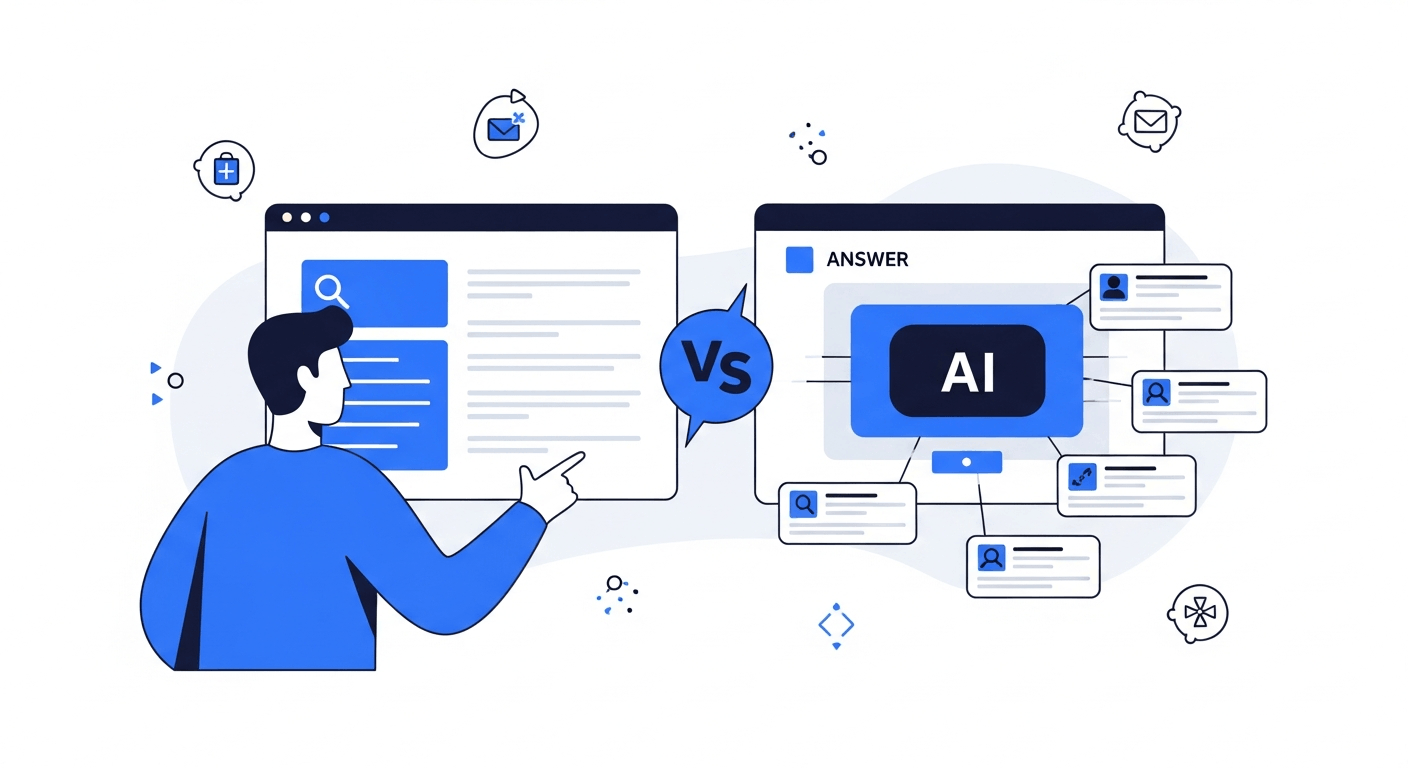
The confusion between AI Mode and AI Overviews is everywhere. They look similar. They both use AI. But they work differently, show up differently, and affect your traffic differently. Here is a side-by-side comparison.
| Feature | AI Overviews | AI Mode |
|---|---|---|
| Where it appears | Above organic results on the SERP | Separate tab/interface (replaces SERP) |
| User activation | Automatic for qualifying queries | User clicks “AI Mode” tab deliberately |
| Traditional results visible | Yes, below the overview | No — AI response only |
| Follow-up questions | Limited | Full conversational thread |
| Query technique | Single search | Fan-out (up to 16 parallel searches) |
| AI model | Gemini-based | Gemini 2.5 with advanced reasoning |
| US query trigger rate | ~50% of searches | Opt-in only |
| Click-through to websites | Reduced but still measurable | 4.5% for informational, 69% for transactional |
The biggest difference is intent. AI Overviews show up whether you want them or not — about 50% of US searches trigger them. AI Mode requires the user to actively choose it. People who enter AI Mode are looking for deeper, more conversational answers. They are willing to trade the ten blue links for a synthesized response.
If you have been following generative engine optimization (GEO) strategies, you already know the patterns: structured content, cited sources, clear answers. AI Mode rewards the same signals, but from a wider pool of sources.
How Google AI Mode actually works
AI Mode uses a technique Google calls “query fan-out.” When you ask a question, it does not run one search. It runs multiple searches simultaneously — up to 16 parallel queries across related subtopics. Then Gemini 2.5 synthesizes the results into a single, structured response.
This is different from how ChatGPT or Perplexity handle search. Those tools typically run one or two searches and build an answer. AI Mode casts a wider net, which is why it cites more diverse sources than traditional Google results.
According to Semrush’s analysis, 92% of AI Mode responses include sidebar citations featuring approximately seven unique domains. But only 35.41% of those cited URLs match what you would see in the organic top 10. The implication: ranking number one on Google does not guarantee a citation in AI Mode.
Under the hood, AI Mode uses retrieval-augmented generation (RAG). It pulls from Google’s web index and Knowledge Graph, then generates a response. The sources it selects are not just the highest-ranked pages. They are the pages with the clearest, most extractable answers to the specific sub-questions it generates.
The traffic impact: two very different stories
The headline stat is alarming: research from iPullRank found that only 4.5% of AI Mode sessions result in a click to an external website. Compare that to 24% in traditional search. That is an 81% drop in click-through.
But that number hides something important.
A study by Sagapixel tracked 52 users conducting transactional searches in AI Mode — finding a dentist, a dermatologist, a Botox provider. In those sessions, 69% of users clicked through to a website. They checked an average of 3.7 businesses per search. 84% scrolled through the full consideration set. 74% read reviews before making a decision.
The takeaway: AI Mode kills informational clicks but preserves transactional ones. If someone is researching a topic, AI Mode gives them the answer and they leave. If someone is trying to buy something or hire someone, they still need to visit your site.
This matters for your content strategy. Pages that answer simple questions (“what is X”) will lose clicks. Pages that help users make decisions (“best X for Y,” product comparisons, service pages) will keep them.
Google is citing itself more than anyone
Here is a stat that should concern every brand competing in AI Mode. According to a study by SE Ranking that analyzed 68,313 keywords and over 1.3 million citations across 20 industries, Google.com is the most cited source in AI Mode — accounting for 17.42% of all citations. That is more than YouTube, Facebook, Reddit, Amazon, Indeed, and Zillow combined.
It has gotten worse. In June 2025, Google cited itself in 5.7% of AI Mode answers. That share has tripled. Nearly one in five AI citations now points back to a Google property.
The breakdown: 59% of those self-citations go to traditional Google search results, 36.1% reference Google Business Profiles, and 1.7% link to Google Support pages. The self-preferencing varies by industry — travel queries see Google cited 53.18% of the time, entertainment 48.74%, and real estate 30.54%.
What does this mean for you? Your Google Business Profile matters more than ever. Keep it updated. Add photos, respond to reviews, post updates. In many industries, a well-maintained GBP is your best shot at being cited in AI Mode — because Google is already pulling from its own properties first.
How to optimize your content for Google AI Mode
Google’s official guidance is blunt: “There are no additional requirements to appear in AI Overviews or AI Mode, nor other special optimizations necessary.” Do good SEO. That is the official answer.
But “do good SEO” is not very helpful when 46% of cited domains in AI Mode are not in the top 10 organic results. The brands getting cited are doing specific things well. Here is what the data suggests.
1. Structure content for extraction, not just reading
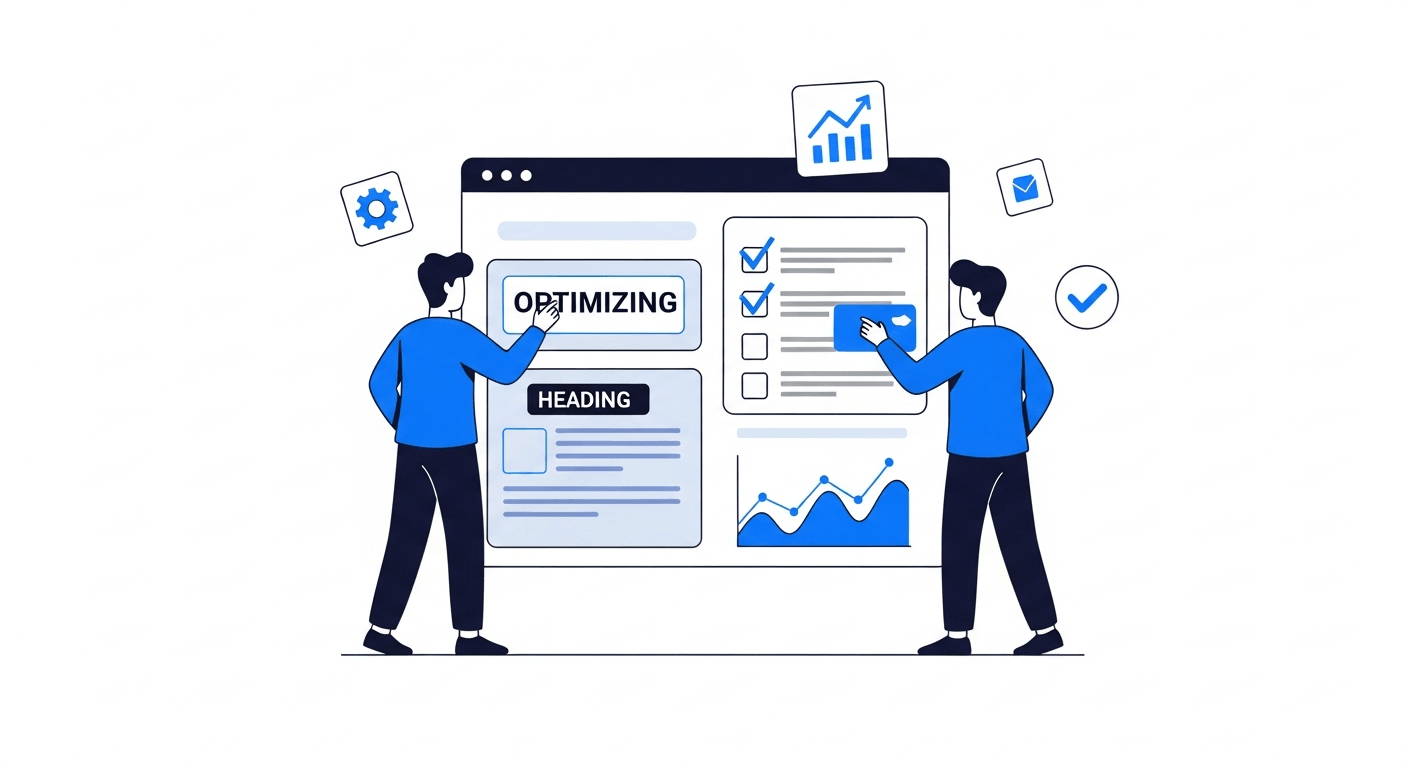
AI Mode uses RAG to pull specific chunks of text. That means clear headings with descriptive IDs, short paragraphs (2-3 sentences), and direct answers placed early in each section. If your opening paragraph buries the answer after three sentences of context, AI Mode will skip it for a page that leads with the answer.
Use the patterns from our GEO audit checklist: summary boxes, comparison tables, numbered steps, and FAQ sections. These formats are easy for AI to parse and cite.
2. Include original data and named sources
AI Mode has a bias toward pages with specific, verifiable claims. “Studies show that engagement increases” gets skipped. “A 2025 Semrush study of 10,000 websites found that pages with FAQ sections receive 23% more AI citations” gets extracted.
If you have proprietary data — survey results, case studies, benchmarks — publish it. AI Mode rewards information gain: content that adds something no other page has.
3. Build E-E-A-T signals beyond your own site
AI Mode pulls from a wider source pool than organic search. That means your off-site reputation matters more. E-E-A-T signals that help include: author profiles with verifiable credentials, brand mentions on Wikipedia, Reddit, and industry directories, guest posts on authoritative publications, and consistent NAP data across business listings.
SE Ranking’s data shows AI Mode favors sources that appear across multiple contexts, not just pages that rank well on Google.
4. Optimize your Google Business Profile
Given that 36.1% of Google’s own AI Mode citations point to Google Business Profiles, this is not optional. Add detailed service descriptions, respond to reviews, upload current photos, and post regular updates. For local and service businesses, GBP may be the single highest-leverage AI Mode optimization.
5. Add structured data the right way
Google says you do not need special AI markup. That is true. But schema markup still helps because it makes your content machine-readable. Use FAQ schema, HowTo schema, Product schema, and Organization schema where appropriate. Do not add schema that does not match visible content on the page — Google specifically warns against this.
6. Cover topics comprehensively, not just keywords
AI Mode’s fan-out technique generates sub-questions from your query. If your content answers the main question but not the follow-ups, AI Mode will cite someone else for those. Build content clusters that cover a topic from multiple angles. Think about what follow-up questions a user would ask, and answer them in your content or in related posts.
7. Differentiate informational vs transactional pages
Since AI Mode behavior differs sharply by intent (4.5% clicks on informational vs 69% on transactional), optimize accordingly. For informational pages, focus on getting cited — brand visibility matters even without clicks. For transactional pages, focus on making the click worthwhile with strong landing pages, clear CTAs, and social proof like reviews.
How to track your AI Mode performance
Google added AI Mode data to Search Console in June 2025. To access it: go to Performance > Search Results, click “+ New” filter, select “Search Appearance,” and choose “AI Mode” from the dropdown. You will see impressions, clicks, and queries from AI Mode citations specifically.
A few things to know about how Google tracks this:
- If your page appears in an AI Mode response, that counts as an impression.
- A click on any external link in AI Mode counts as a click.
- Follow-up questions in the same AI Mode conversation count as new, separate searches.
- Positions are calculated per component (link card, image, carousel) within the AI response.
Search Console is the baseline. For a more complete picture, you also want to track AI citations across ChatGPT, Perplexity, and other AI search engines. Tools like BlueJar’s GEO audit can show you how your content scores across all the factors that drive AI citations — not just on Google, but across the full AI search ecosystem.
Run your free GEO audit at bluejar.ai to see how your site scores across schema, E-E-A-T, citation-readiness, content structure, and technical SEO.
What to expect from AI Mode in 2026 and beyond
AI Mode is still early. Only 8% of users prefer it over traditional search, according to survey data compiled by DemandSage. Traditional search still leads at 41%, with AI Overviews at 33%. But adoption will grow as Google continues to push the feature.
Google is already making AI Mode citations more visible. In early 2026, they launched more prominent link displays in both AI Overviews and AI Mode, making cited sources more clickable. That is a good sign for publishers — Google seems to recognize that zero-click answers need to at least credit their sources.
The self-preferencing issue is harder to predict. Google citing itself in nearly 20% of AI Mode responses has drawn attention from regulators and the SEO industry. Whether that share grows or shrinks will depend on regulatory pressure and competitive dynamics.
For now, the best approach is the same one that works across all AI search engines: create content that is structured, cited, authoritative, and genuinely useful. The brands that treat AI Mode as just another channel to optimize for — alongside ChatGPT, Perplexity, and Gemini — will be the ones that maintain visibility as search continues to fragment.
Frequently asked questions
What is the difference between Google AI Mode and AI Overviews?
AI Overviews appear above traditional search results and trigger automatically on about 50% of US queries. AI Mode is a separate search interface that users opt into, replacing the standard results page entirely with a conversational AI experience powered by Gemini 2.5. AI Mode runs up to 16 parallel searches to generate its answers.
Does Google AI Mode hurt website traffic?
It depends on query type. Research from iPullRank found only 4.5% of informational AI Mode sessions produce a click. But a Sagapixel study showed 69% of transactional searches in AI Mode drive traffic to websites. Informational content loses clicks; transactional and decision-making content keeps them.
How do I optimize my website for Google AI Mode?
Google officially says no special optimization is needed beyond standard SEO. In practice, the sites getting cited focus on clear content structure, original data with named sources, strong E-E-A-T signals, updated Google Business Profiles, and proper schema markup. Running a GEO audit through tools like BlueJar can identify specific gaps in your AI readiness.
Can I track AI Mode clicks in Google Search Console?
Yes. Since June 2025, AI Mode data appears in Search Console under Performance > Search Results. Filter by Search Appearance > AI Mode to see impressions, clicks, and queries. Each follow-up question in an AI Mode conversation counts as a separate search.
Why does Google cite itself so much in AI Mode?
An SE Ranking study of 68,313 keywords found Google.com accounts for 17.42% of all AI Mode citations, up from 5.7% in June 2025. Most of those self-citations point to Google Business Profiles (36.1%) and traditional search results (59%). This self-preferencing varies by industry, with travel queries seeing the highest rate at 53.18%.
Is Google AI Mode available outside the United States?
Yes. Google launched AI Mode in Search Labs on March 5, 2025, rolled it out to all US users on May 20, 2025, and has since expanded to 180 countries and territories.
How is AI Mode different from ChatGPT or Perplexity search?
AI Mode runs within Google Search and uses Google’s own web index and Knowledge Graph, while ChatGPT and Perplexity use their own retrieval systems. AI Mode’s “query fan-out” runs up to 16 parallel searches per question, generally pulling from more sources. The key difference is that AI Mode has direct access to Google Business Profiles, Google Shopping data, and other Google properties that third-party AI search engines cannot access.