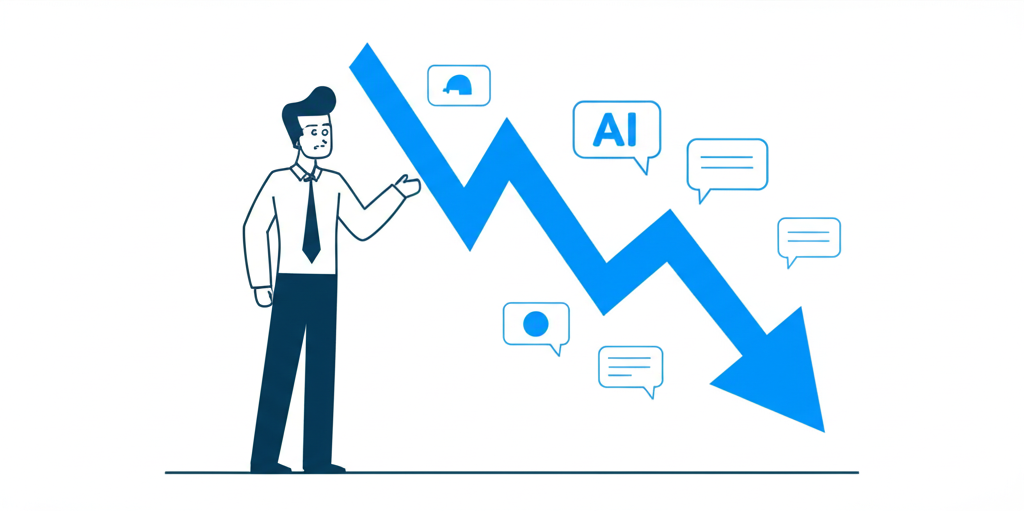
The math has changed. Traffic from search doesn’t mean what it used to. In 2025, 69% of Google searches end without a single click to any website. And in AI search specifically, the number is even more sobering: 93% of AI search sessions end without a website visit. For businesses that depend on organic search traffic, these numbers demand a fundamental rethinking of strategy.
But the zero-click story isn’t all doom. There’s a counterintuitive upside that most analysis misses, and a clear set of strategies for thriving in this new reality. Let’s look at the data, what’s driving it, and exactly what to do about it.
TL;DR — The Zero-Click Crisis in AI Search
- 69% of Google searches ended without a click in 2025 — AI search accelerates this trend
- 93% of AI search sessions end without a website visit — but the cited source still wins brand exposure
- Zero-click is a revenue opportunity if you are the source being cited in AI answers
- Rethink success metrics: track brand impressions and AI citations, not just organic clicks
- Industries most impacted: healthcare, legal, financial services, and local businesses
Table of Contents
The Zero-Click Data: 69% in 2025
The zero-click trend has been accelerating for years, but the pace of change has intensified dramatically:
- 2020: Approximately 50% of Google searches ended without a click (Sparktoro/Jumpshot data)
- 2023: 56% zero-click rate (Semrush study)
- 2024: 62% zero-click rate, accelerating after AI Overviews launch in May
- 2025: 69% of searches end without a click to any website
Each jump was driven by a different Google feature expansion:
- 2020-2022: Featured snippets, knowledge panels, and People Also Ask boxes absorbed clicks that previously went to websites.
- 2023: Expanded SERP features including Google’s own tools (calculator, currency converter, weather) and more comprehensive knowledge panels.
- 2024-2025: AI Overviews became the single biggest driver. When Google generates a complete answer at the top of the page, the incentive to click through drops significantly.
AI Overviews now appear in 25.11% of Google searches. In queries where they appear, click-through rates to organic results drop by roughly 35%. As AI Overviews expand to more query types, the 69% zero-click rate will likely continue climbing.
Why AI Makes Zero-Click Worse (And Better)
Here’s the counterintuitive truth that most zero-click analysis ignores: a zero-click interaction where your brand is cited in an AI answer is fundamentally different from a zero-click interaction where Google shows a knowledge panel.
Traditional zero-click (bad): User searches “population of France,” Google shows the answer in a knowledge panel, user gets their answer, user leaves. Your content played no role. You got nothing.
AI zero-click (potentially good): User searches “best tools for email marketing,” AI Overview generates an answer citing 6 sources including your comparison article. User reads the answer, sees your brand name and your analysis, and may not click — but they’ve now associated your brand with authoritative email marketing guidance.
The second scenario is a brand impression with endorsement. The AI model has effectively said “this brand is an authority on this topic.” That has value, even without a click.
And when users do click through from AI answers, the data shows remarkable behavior: AI referral traffic converts at 4.4x the rate of traditional search traffic. The users who click through AI citations are pre-qualified — they’ve already seen the AI’s summary and are clicking because they want the deeper content your site offers.
So the zero-click crisis is real, but the response isn’t to optimize for more clicks — it’s to optimize for citation presence in the answers that are replacing clicks.
Zero-Click by Industry
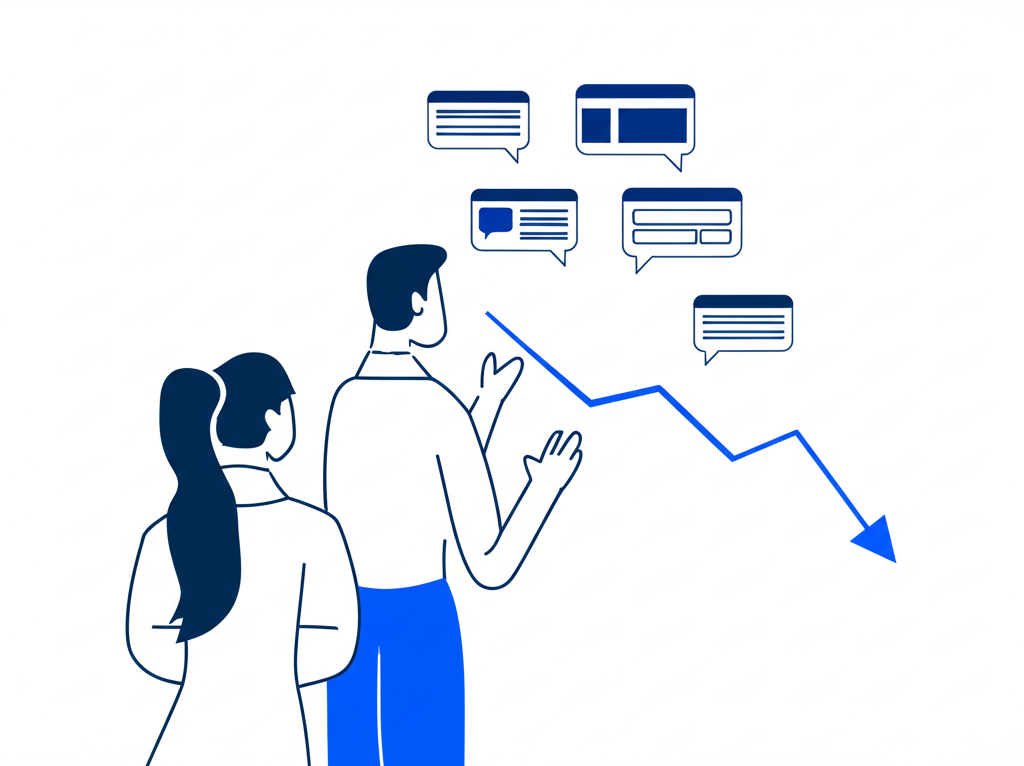
The zero-click rate isn’t uniform across industries. Some sectors are hit much harder than others:
Hardest hit (75%+ zero-click rate):
- Definitions and factual queries: “What is…” queries are almost entirely answered in the SERP now. If your content strategy relies on definition-style content, you’re losing the most traffic.
- Weather, sports, stocks: Google has built direct answer panels for these, eliminating virtually all clicks to third-party sites.
- Local searches: Google Maps and local packs absorb most local intent, though businesses with good Google Business Profiles still benefit from calls and direction requests.
Moderately affected (60-70% zero-click rate):
- How-to and educational content: AI Overviews frequently answer these, but complex how-to queries still drive clicks for detailed tutorials.
- Health and medical: Google is cautious with YMYL AI Overviews, but health knowledge panels and WebMD-style direct answers absorb many clicks.
- Legal information: Basic legal questions get answered in the SERP, though complex legal scenarios still drive clicks to attorney sites.
- Travel planning: Google’s travel features (flights, hotels, things to do) have captured significant share from travel content sites.
Less affected (50-60% zero-click rate):
- Product comparisons and reviews: Users still want detailed comparison content, especially for high-consideration purchases.
- Software and technical documentation: Developers and technical users frequently click through to documentation and Stack Overflow-style content.
- B2B research: Business purchasing decisions require more depth than an AI summary can provide.
The 93% AI Search Statistic
While the 69% zero-click rate refers to Google searches broadly, there’s an even more dramatic number for AI-native search: 93% of AI search sessions end without a website visit.
This statistic comes from analysis of user behavior on AI search platforms like ChatGPT, Perplexity, and Claude. When users engage with an AI chatbot for information, the vast majority get their answer within the conversation and never click a source link.
Why is the AI search number so much higher than Google’s?
- Conversational completion: AI chatbots provide complete, synthesized answers. There’s less need to click through for additional context.
- Follow-up capability: Users can ask follow-up questions within the same session, eliminating the need to visit a website for related information.
- Citation de-emphasis: While platforms like Perplexity show citations prominently, ChatGPT and Claude present citations less visibly, reducing click-through incentive.
This 93% figure underscores why AI visibility strategy can’t be purely about driving clicks. It must also account for the brand-building value of being cited in AI answers that users consume without clicking.
Rethinking Success Metrics in the AI Search Era
If 69-93% of search interactions don’t result in clicks, measuring success solely by organic traffic is like measuring a billboard’s effectiveness by counting how many drivers pull over. You need new metrics.
Citation Share vs Ranking Position
Instead of tracking your rank for target keywords, track how often your brand appears in AI-generated answers for those queries. This is your “citation share” — the percentage of AI answers in your topic area that cite your content. Citation share is the new market share of search visibility.
Brand Impression Depth vs Click Volume
An AI citation that includes your brand name, a description of your offering, and a link to your site provides a deeper brand impression than a blue link on page 1 that the user scrolls past. Track brand recognition and branded search volume as proxies for the impression value of AI citations.
AI Referral Conversion Rate
When users DO click through from AI citations, they convert at 4.4x the rate of traditional search. Track your AI referral traffic separately in analytics (referrals from perplexity.ai, chatgpt.com, google AI Overview clicks) and measure its conversion rate against other channels. You may find that 100 AI referral visits are worth more than 500 organic visits.
Share of Voice in AI Answers
For your top 20 target queries, how often does your brand appear in the AI-generated answer? Track this monthly. An increasing share of voice means your GEO strategy is working, even if total click volume is declining.
Content Strategies for the Zero-Click World
Accepting the zero-click reality doesn’t mean accepting defeat. It means adapting your content strategy to extract value from a world where most interactions happen without a click.
1. Brand-Building Content That Works Without Clicks
Create content specifically designed to be cited in AI answers — content where having your brand name appear in the citation is the primary goal, not the click-through. This includes proprietary research, industry benchmarks, definitive guides, and expert analysis that AI models will reference.
When an AI answer says “According to [Your Brand]’s 2026 report…” that’s a brand endorsement seen by every user who reads that answer, regardless of whether they click.
2. Mid-Funnel Content That AI Can’t Fully Answer
AI can summarize facts and explain concepts, but it struggles with nuanced, complex content that requires human judgment. Create content that AI will cite but can’t fully replace:
- Interactive tools and calculators
- Detailed case studies with proprietary data
- Video demonstrations and tutorials
- Comparison tools that require real-time data
These content types get cited in AI answers AND drive clicks because users need to visit your site to get the full value.
3. Proprietary Data That Drives Citations AND Clicks
AI models love citing specific statistics. If you produce original research, surveys, or data analysis, you become a primary source that AI models reference repeatedly. The key is creating data that is:
- Specific enough to be quotable (“44% improvement” beats “significant improvement”)
- Comprehensive enough that AI can’t fully convey the findings in a citation
- Regularly updated so AI models keep citing your latest data
4. Tool and Calculator Content That Requires Interaction
The one content type that zero-click can never fully absorb is interactive content. An AI can describe how to calculate your tax liability, but it can’t run the calculation with your specific numbers. Invest in tools, calculators, assessments, and interactive content that provides value only through direct interaction with your site.
How to Measure Your AI Citation Share
Tracking your presence in AI-generated answers requires different tools than traditional rank tracking.
Manual monitoring: Run your top target queries across Google (for AI Overviews), Perplexity, and ChatGPT. Record whether your brand appears in the answer. Do this weekly for your top 20 queries.
Server log analysis: Monitor your server logs for crawl activity from AI bots (PerplexityBot, GPTBot, ClaudeBot, Googlebot). Increasing crawl activity suggests your content is being evaluated for citation.
Automated GEO tracking: BlueJar’s GEO audit and CV Tracking monitors your AI citation presence across multiple platforms automatically. It provides a GEO score (0-100) that quantifies your AI visibility and tracks changes over time. Try a free audit to benchmark your current zero-click performance.
The businesses that will thrive in the zero-click era are those that stop fighting the trend and start optimizing for it. The clicks may be fewer, but the ones that come through are worth more. And the brand visibility from AI citations reaches users you’d never have captured with traditional search alone.
FAQ: Zero-Click and AI Search
Is zero-click search actually bad for businesses?
It depends on your strategy. If you rely solely on organic click traffic, yes — zero-click is eroding your channel. But if you adapt to measure and optimize for AI citation visibility, you can build brand awareness and capture high-intent traffic (4.4x conversion rate) from the clicks that do happen. The businesses most at risk are those that ignore the trend and keep optimizing for metrics that are becoming less meaningful.
Should I block AI crawlers to force users to visit my site?
This is a short-term temptation with long-term consequences. If you block AI crawlers, your content becomes invisible to AI search engines. Users who ask AI about your topic will get answers citing your competitors instead. In most cases, the brand visibility value of AI citations outweighs the click loss.
How does the 4.4x conversion rate work?
When users click through from an AI-generated answer, they’ve already been pre-qualified. The AI has explained the basics, and the user is clicking because they want deeper engagement — to try your tool, read your full report, or start a purchase. This pre-qualification effect makes AI referral traffic among the highest-converting traffic sources available.
Will zero-click rates keep increasing?
Almost certainly. As AI models improve and AI Overviews expand to more query types, the percentage of searches satisfied without a click will continue to grow. The 69% figure is likely a mid-point, not a peak. Planning for 75-80% zero-click rates by 2027 is prudent.
What’s the difference between Google zero-click and AI search zero-click?
Google zero-click (69%) includes all searches where users don’t click any result — knowledge panels, calculator widgets, featured snippets, and AI Overviews. AI search zero-click (93%) specifically measures behavior on AI chat platforms where users get conversational answers without clicking source links. Both are important, but AI search zero-click is much higher because the conversational format provides more complete answers.
How can small businesses compete in the zero-click era?
Small businesses should focus on two areas: first, niche expertise that AI models cite because no one else covers the topic as thoroughly. Second, interactive and local content that requires direct engagement. A small accounting firm’s tax calculator or a local restaurant’s online reservation system can’t be replicated by an AI answer.
Does paid search also face zero-click challenges?
Paid search is affected differently. AI Overviews can push paid ads further down the page on mobile, and some informational queries that triggered ads now trigger AI Overviews instead. However, for high commercial intent queries, paid ads remain above AI Overviews and continue to perform. The zero-click impact on paid search is smaller than on organic, but it’s real.
Frequently asked questions
What is a zero-click search?
A zero-click search is a search where the user gets their answer directly from the search results page without clicking through to any website. AI Overviews, featured snippets, knowledge panels, and direct answer boxes all create zero-click searches. Zero-click rates have been rising — estimates suggest over 50% of Google searches now result in no click.
How does the zero-click crisis affect content strategy?
The zero-click crisis doesn’t mean you should abandon content creation — it means you should reframe the goal. Instead of optimizing purely for click-through traffic, optimize for citation visibility: appear as a cited source in AI answers, build brand recognition through repeated AI mentions, and create content that drives brand searches even when the immediate query is answered without a click.
Is GEO optimization the solution to zero-click searches?
GEO optimization directly addresses the zero-click challenge. By optimizing for AI citations, you ensure your brand appears as a trusted source in AI answers — even when users don’t click through. This builds brand authority and drives direct and branded search traffic. Being cited in AI Overviews and Perplexity answers is the new ‘rank #1’ in a zero-click world.
How do I track brand visibility in AI answers?
Track AI brand visibility through: (1) Manual testing — regularly ask relevant queries in ChatGPT, Perplexity, and Google AI; (2) Branded search volume in Google Search Console (rising branded searches correlate with AI mention increases); (3) AI referral traffic in GA4 (sessions from chat.openai.com, perplexity.ai); (4) BlueJar’s competitive tracking for systematic monitoring.
What content strategies work best in a zero-click environment?
Effective zero-click strategies: (1) Brand building content that creates recognition even without a click, (2) FAQ and structured Q&A content that gets cited in AI answers, (3) Unique research and statistics that AI must cite your site to use, (4) Bottom-of-funnel content targeting high-intent queries that still drive conversions, (5) Brand searches — optimize for queries that include your brand name.